From the beginning and for several centuries, the breaking of consecrated bread was a practical and necessary gesture to prepare the particles that were distributed in communion. As there were no small forms, it was celebrated with unleavened bread that then had to be broken to be distributed to the faithful. This gesture also had several symbolic meanings referring to the Eucharist. Everyone could see a clear relationship between this moment and the moment of the institution of the Eucharist where Jesus, like the Jewish paterfamilias, gives his disciples the nourishment of his Body and Blood.
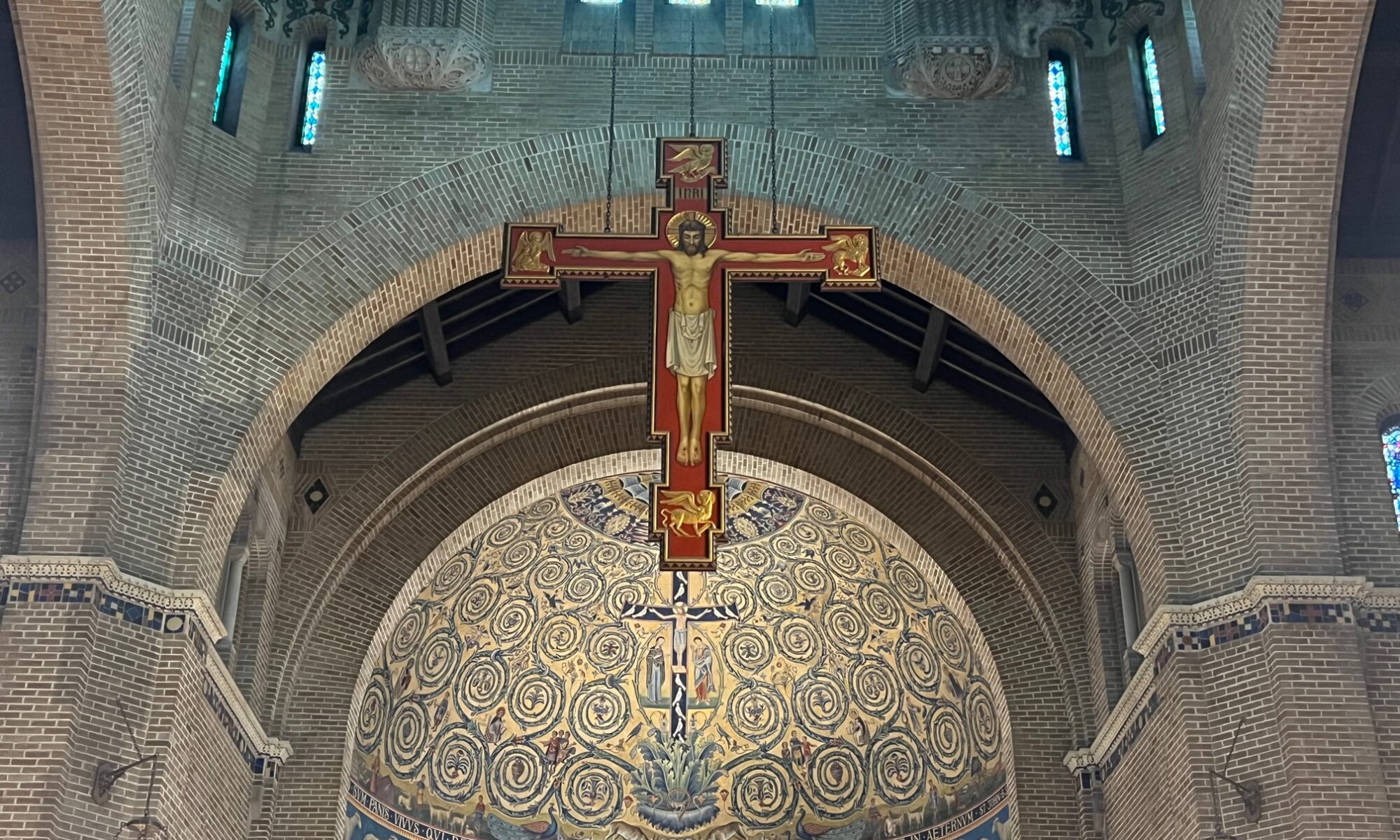
Then, during this moment of the liturgy, the song of the Lamb of God was introduced. In this way, a new reality was emphasized, the sacrificial and salvific dimension of the Eucharist. Jesus is the Lamb of God who takes away the sin of the world. The food he distributes is his slain body. In this way, the sense of communion and the sense of sacrifice are presented together. The fraction prepares the food of Christians, which is the sacrificial Body of Jesus Christ, the Lamb of the new Passover (cf. Revelation 5, 6 and 13).
In this way, the gift that Jesus Christ makes of himself as a sacrificed bread-body is clearly manifested. When the faithful receive it worthily, the Eucharist makes both Christ and the faithful one body. In this way, the Mystical Body of Christ is constantly renewed, and can thus live by His life (1 Corinthians 10:17).
A simple and important gesture at the same time is the conmixtio, which consists of the priest introducing a small particle of the Body of Christ into the chalice (GIRM 72). The union of the two species of consecrated bread and wine, which had hitherto been separated, symbolizes the one person of the glorious Christ, vivified by the Holy Spirit.
Then the priest, showing the people the consecrated host, repeats the words of John the Baptist: “This is the Lamb of God who takes away the sin of the world” (John 1:29). And he adds the words that, according to the Apocalypse, he says in the heavenly liturgy: “Blessed are those who are invited to the supper of the Lord” (Revelation 19:1-9).
The assembly then responds by repeating the words of the Roman centurion, who amazed Christ with his humble and bold confidence: “Lord, I am not worthy that you should enter my roof, but only say the word and my soul shall be healed” (Matthew 8:8-10).
Without a doubt, knowing the meaning of the words and gestures of the liturgy helps us to enter into communion with the Lord. But living faith in those who participate in the Eucharist is essential. To discover the presence of the Lord, his love that becomes self-giving in order to enter into communion with us. “The Eucharist is the gift that Jesus Christ makes of himself, manifesting God’s infinite love for every man” (Sacramentum Caritatis 1).
Let us ask Mary, the Eucharistic woman, to help us not to waste the treasure that God has given in the Eucharist, but that by loving and living the mystery of Christ we may be transformed into Him.
López, Félix “Explanation of the Mass – The Breaking of the Bread and the Lamb of God”, Home of the Mother, accesed 22 June 2024, https://www.homeofthemother.org/en/resources/eucharist/549-explanation-of-the-mass/2415-lamb-of-god