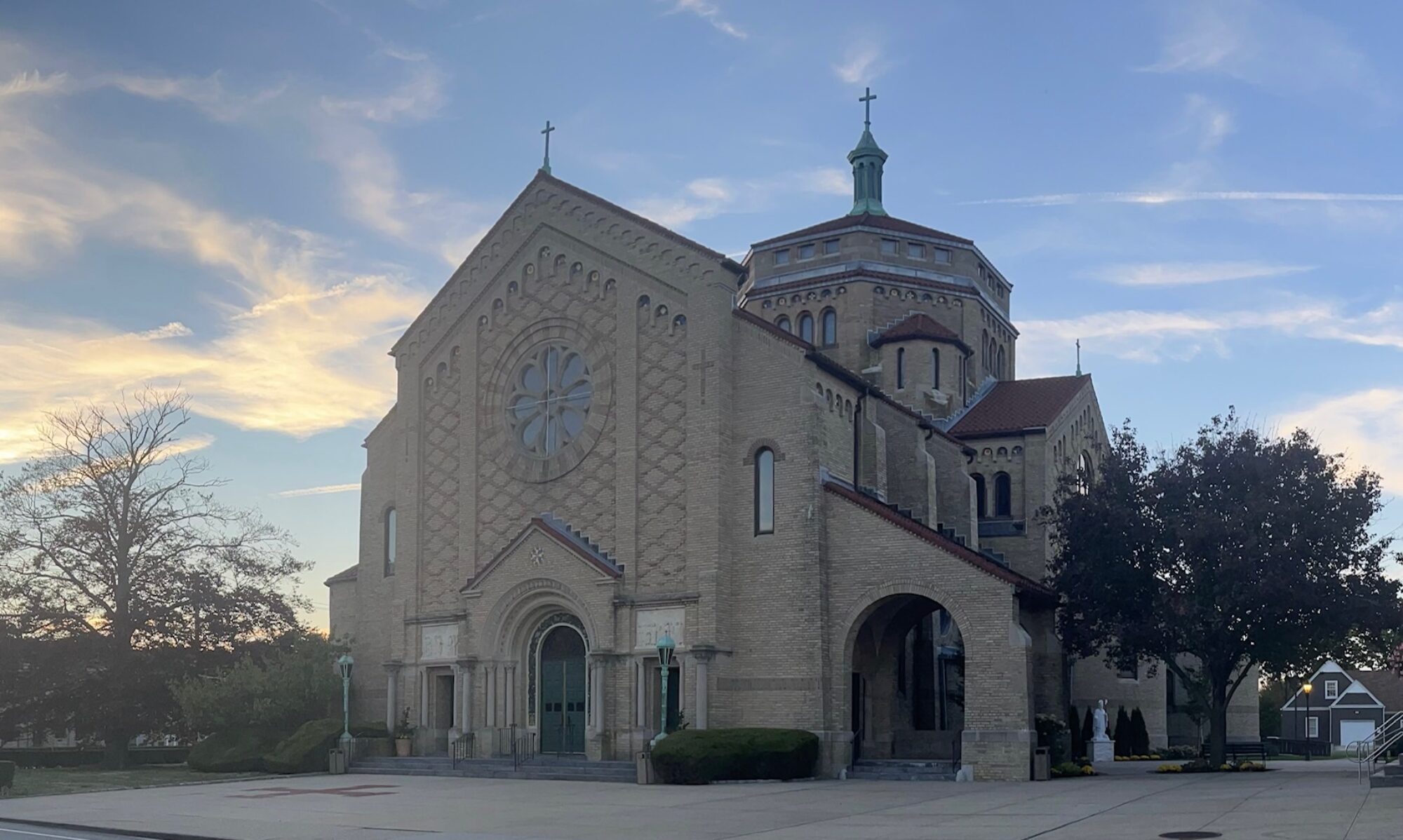
As a Catholic, how should I show respect for the temple, including the altar and the tabernacle, and why is it important to do so?

The temple is a sacred place where we can encounter God in a special way. Therefore, as Catholics, we must treat the temple with respect and consideration. The altar and the tabernacle are two places of great importance in the temple that require a particularly reverent attitude from us.

In the Catholic Church, the altar is the place where the Eucharist is celebrated, which is the central sacrament of our faith. Therefore, when approaching the altar, we must do so with respect and consideration. In the Code of Canon Law, it is established that the altar, at which the Sacrifice of the Cross is made present under sacramental signs, is also the table of the Lord on which the People of God are gathered to participate in the Eucharist (GIRM 296).

That is why, when approaching the altar, a bow or reverence is made, which is a demonstration of respect and adoration to God, who is present in a special way in the sacrament of the Eucharist. As Psalm 138:2 says: “I will bow down toward your holy temple and will praise your name for your unfailing love and your faithfulness”.

On the other hand, the tabernacle is the place where the Blessed Sacrament is kept after Mass so that the faithful can visit and pray before it at any time. It is a place of prayer and adoration, and as such, we must show respect when approaching it. The Catholic Church teaches that the Blessed Sacrament is the body and blood of Christ, and that is why we must make a genuflection when approaching it. This is a demonstration of our faith in the real presence of Jesus in the Blessed Sacrament.

In the Catechism of the Catholic Church, we are reminded that the tabernacle was first a tent, or a portable sanctuary, which served as a movable sanctuary during the Exodus. Today the true ‘sanctuary’ of the New Testament is Christ Himself. That is why our attitude when approaching the tabernacle must be one of respect and adoration, because it is there that the presence of Christ in the Blessed Sacrament is found.

In summary, as Catholics, we must treat the temple with respect and consideration, and demonstrate our reverence and adoration when approaching the altar and the tabernacle. The bow or reverence to the altar and the genuflection to the Blessed Sacrament in the tabernacle are expressions of our faith in the real presence of Christ in the Eucharist and in the Blessed Sacrament. Let us remember the words of Psalm 29:2 “Ascribe to the Lord the glory due his name; worship the Lord in the splendor of his holiness.

What is a plenary indulgence?

During certain festivals and occasions, the Church offers the faithful what are known as plenary indulgences, but what are plenary indulgences? To understand the concept, we first have to understand the concept of penance, let’s imagine a freshly cut wood, smooth on all sides, this is how our soul is after receiving baptism, now let’s imagine nails on said board, the nails represent each sin we have committed, with the sacrament of reconciliation, these nails are removed from the board, but the wood now has holes and the  occasional splinter, it is no longer smooth, it is through penance that we fill those holes and sand the board again to make it smooth again, this implies effort and dedication. This process can be compared to penance. In order for our soul to be clean again as it was after our baptism, we must not only confess our sins but also comply with penance, this penance is paid in two ways: with suffering and good works in this life or with a time in purgatory.

The Catholic Church, under the authority that Jesus Christ himself granted it (Matthew 18:18), establishes that plenary indulgence is the remission before God of the temporal penalty for sins, already forgiven, in terms of guilt, that a The willing faithful obtain through the mediation of the Church (CCC 1471), that is, the plenary indulgence is in charge of correcting the penalties of those sins that we have confessed up to that moment. A plenary indulgence can be obtained to also remedy the sorrows of a deceased person, so that his soul can be admitted to the Kingdom of Heaven.

How can we obtain a plenary indulgence? There are ways to obtain a plenary indulgence at any time: adore the Blessed Sacrament for half an hour, pray a Stations of the Cross, pray the rosary as a family or in community, read the Bible for half an hour, you can also obtain a plenary indulgence on special occasions, such as: Saying an Our Father and a Creed in a sanctuary or basilica, Receiving the Urbi et Orbi blessing, doing three-day spiritual exercises, Saying a “Te Deum” on December 31 or a “Veni Creator” on January 1 in a church, Pray a “Look at me, O my beloved and good Jesus” before a crucifix any Friday of Lent after communion, pray a “Tantum ergo” on Holy Thursday before the Blessed Sacrament after the services, attend the services on Good Friday, renewing baptismal promises at the Easter Vigil, praying the “Veni Creator” in a church on the day of Pentecost, participating in the Corpus Christi Eucharistic procession, praying an Our Father and a Creed in a cathedral or parish on the 2nd of August, and other opportunities determined by the Supreme Pontiff. All this accompanied by sacramental confession, Eucharistic communion and prayer for the intentions of the Supreme Pontiff. (Enchiridion Indulgentiarum)

Let us use the mediation of our Holy Mother Church, to obtain a plenary or partial indulgence, and while we can, let us deliver these indulgences for the salvation of the souls in purgatory.

How should I celebrate the Feast of Divine Mercy?

On the second Sunday of Easter time, the Church celebrates Divine Mercy Sunday, but where does this devotion come from? The devotion to the Divine Mercy of God comes through the private revelations made to Saint Faustina Kowalsca, a Polish nun with no basic education who, in obedience to her spiritual director, wrote a diary of around 600 pages that recounts the revelations she received on the Mercy of God.

The message of Mercy is that God loves us all, no matter how great our faults. He wants us to recognize that His mercy is greater than our sins, so that we approach Him with confidence, so that we receive His mercy and let it pour out on others.

Asking for the Mercy of our Lord, trusting in His Mercy, and living as merciful people, we can ensure that we will never hear “Their hearts are far from me” (Isaiah 29:13) but rather the beautiful promise of “Blessed are the merciful, since they will obtain Mercy” (Matthew 5:7). Therefore, to celebrate this feast of Divine Mercy, this Sunday after Easter Sunday, we must:

  • Come to the Lord with a humble and contrite heart, repent of all sins
  • Trust firmly in the Divine Mercy of the Lord.
  • Confession to a priest on that day if possible, otherwise twenty days earlier or later as approved by the Church.
  • Receive the Holy Eucharist on the day of the Feast.
  • Venerate the image of Divine Mercy.
  • Being merciful as God is merciful, practicing works of mercy, physically helping others or spiritually with intercessory prayers.
  • Pray for the intentions of the Supreme Pontiff

Complying with these requirements assures us a plenary indulgence, that is, the complete healing of the penance of those sins that we have confessed or the penances that the soul of a deceased has to fulfill. (CCC 1471).

Let the Divine Mercy of Our Lord pour out on us, that the blood and water that flowed from the heart of Jesus Christ cleanse us of our sins and give us eternal life.


Catholic.Net, “Domingo de la Divina Misericordia”, Catholic Net Inc, Accessed: 4/11/2023 https://es.catholic.net/op/articulos/18181/domingo-de-la-divina-misericordia.html

Why did Jesus Christ have to die on the cross?

Jesus Christ came into this world to offer himself as the perfect sacrifice, shedding his blood on the cross for the salvation of all sinners, living and dead (CCC 632), as part of God the Father’s salvific plan for us (CCC 601).

We can observe this salvific plan from the beginning of time in the fall of humanity when God warns the serpent of the enmity between his offspring and the offspring of Eve (Genesis 3:14-15).

Just like this, we have many other references in the old testament prefiguring Jesus.

Isaac carries the wood to build the altar, when on the way he asks his father Abraham where the lamb is for the sacrifice; he continues to accompany and obey his father when he had already realized that it was himself, who would be the sacrifice to God (Genesis 22:6-9). So also Jesus Christ, carries the wooden cross for his own sacrifice (John 19:17), obeying the will of his heavenly Father (Mark 14:36).

When the Israelite people in the exodus from Egypt begin to speak against God, they are attacked by snakes in the desert, God tells Moses to raise a bronze serpent on a banner and whoever has been bitten by a snake, should turn to see said banner and would not die (Numbers 21:4-9), so also Jesus was raised on the cross, those who fix their eyes on Jesus Christ and believe in Him, will not suffer eternal death (John 3:14)

Another reference in the history of salvation is the story of Jonah, who was inside a big fish for three days (Jonah 1:17), then, coming out of it, he went to Nineveh to do the will of God. Also Jesus Christ was in darkness and on the third day he came out of it through his resurrection (Luke 24:6-7) to redeem the world following God’s salvific plan.

We also have one of the greatest references in the salvation of the Israelite people in the first Passover, where they were saved from death by having the mark of the blood of the spotless lamb on their doors (Exodus 2:13) and consuming their meat accompanied by the unleavened bread (Exodus 2:8), so is Jesus Christ, the Lamb of God, who by his blood shed on the cross opened the door to the Kingdom of Heaven for us, who frees us from the death of sin through his body and blood that we consume in the paschal banquet that is offered to us in each mass.

Let us faithfully attend Mass, recognizing God’s salvific plan announced from the beginning of time and through the scriptures in our Lord Jesus Christ, whom we receive every time we enter in communion with Jesus through the Holy Eucharist.

What does the Catholic Church teach about dead-end life issues, specifically related to brain death, and what is the basis for this teaching in theology, scripture, and Canon Law?

The Catholic Church affirms that life is a gift from God, and thus, it is inviolable and sacred from conception to natural death. The Church teaches that euthanasia, assisted suicide, and any act that intentionally takes or hastens the end of a person’s life are morally wrong and contrary to the dignity of human life. However, the Church recognizes that there are cases where a person’s death is imminent, and the only thing left to do is to withdraw medical treatment that is deemed burdensome or disproportionate to the expected outcome. In such cases, the Church encourages the provision of palliative care to alleviate pain and suffering, while preserving the dignity of the person until natural death.

One of the specific issues related to end-of-life concerns is the concept of brain death. Brain death is defined as the irreversible cessation of all brain function, including the brainstem. It is recognized by the medical community as a legal definition of death in most countries. In the Catholic Church, the concept of brain death is widely accepted, although there is ongoing debate on the specifics of how it is determined.

The Catholic Church’s position on brain death is based on the principle of the unity of the body and soul. According to this principle, the soul animates the body and gives it life, and the body is an essential aspect of human identity. Therefore, the death of the body marks the end of a person’s life. The Church recognizes that the brain is an essential organ that controls bodily functions, and the cessation of all brain function, including the brainstem, means that the person is dead.

Scripturally, the Church’s position on the sanctity of human life is founded on the fifth commandment, “Thou shall not kill.” This commandment includes the prohibition against taking one’s own life, assisting someone in suicide, and directly killing an innocent person. The Church upholds the dignity of the human person, as each person is created in the image and likeness of God, and every human life is of infinite value.

In terms of Canon Law, the Church has established guidelines for the provision of pastoral care for the sick and dying. Canon 1007 states that the anointing of the sick is to be conferred on those who, having reached the use of reason, begin to be in danger due to sickness or old age. The sacrament of anointing is intended to strengthen the sick person in their spiritual and physical struggle, not to hasten their death.

In conclusion, the Catholic Church teaches that life is a sacred gift from God and must be respected from conception to natural death. The Church recognizes the concept of brain death and supports the withdrawal of medical treatment that is burdensome or disproportionate to the expected outcome. However, the Church opposes euthanasia, assisted suicide, and any act that intentionally takes or hastens the end of a person’s life. The Church upholds the sanctity of human life and encourages the provision of palliative care to alleviate pain and suffering while preserving the dignity of the person until natural death.