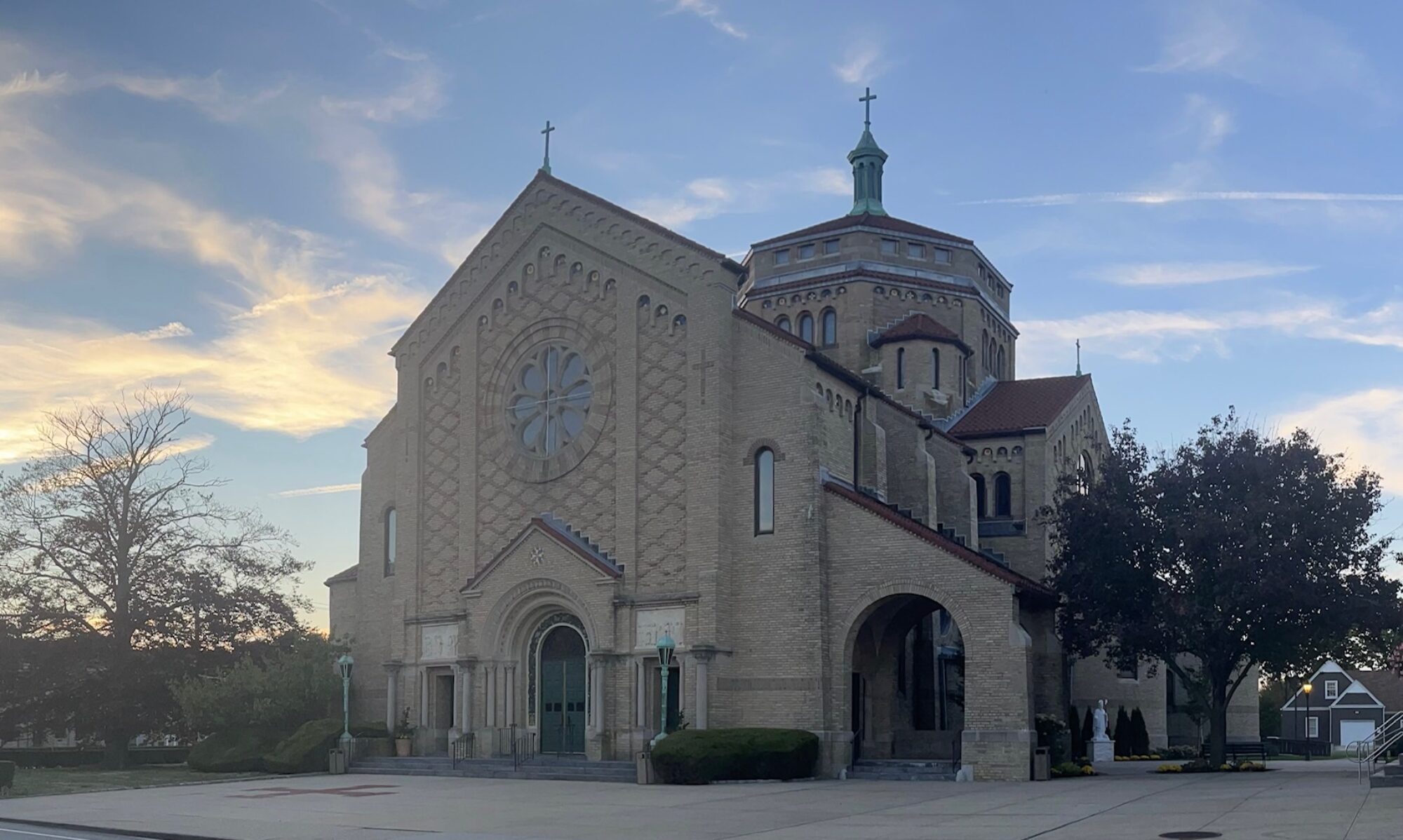
Why do we say that Jesus Christ is King of the Universe?

Our Lord Jesus Christ is not only the Eternal Redeemer of humanity (Romans 3:21-24), who for our salvation came down from heaven and by the and by the Holy Spirit was incarnate of the Virgin Mary,  but is also the King of Creation, by the very fact that through Him that all creation was made (John 1:1-5), how can he not then be king of his own creation?

The coming of Jesus, the Christ, the Messiah; is announced to humanity since the beginning of time (Genesis 3:15), His arrival and kingship prophesied in several passages of the old testament, both in the first days of the formation of the kingdom of Israel (Psalm 22:27-29), during the exile of God’s chosen people in Babylon (Daniel 7:13-14) as king of an eternal kingdom. The prophet Isaiah not only prophesied the virginal birth of Jesus Christ (Isaiah 7:14) but also his royal lineage (Isaiah 9:6).

The royal lineage of Jesus was also recognized during his stay among us, from his birth announced by the angels (Luke 2:11), by his own disciples (John 12:14-15 ref Zechariah 9:9), by the Jewish people themselves (John 12:12-13), by those who were in a position of power (John 18:37), by the powerless (Luke 18:35-38), as well as by those sentenced to death (Luke 23:40-42).

Jesus Christ the King is present at the beginning of the Church (1 Timothy 6:13-15) and is also present at the end of time (Revelations 17:14), as King and triumphant winner.

Let us recognize in Jesus Christ the King of Kings, to whom God gave the highest honor and the most excellent of all names, so that at the name of Jesus every knee should bend of those in heaven and on earth and under the earth.

Long Live Christ the King! Long Live Christ the King! Long Live Christ the King!

What are relics and what meaning do they have for Catholics?

The word relic comes from the Latin relinquo, literally meaning “I leave”, or “I abandon”. A relic is a piece of the body of a saint, an item owned or used by the saint, or an object which has been touched to the tomb of a saint. Traditionally, a piece of the body of a saint, especially that of a martyr, may be with the permission of the local ecclesiastical authority used in solemn processions recalling the specific holy person.

There are three classes of sacred relics. The first-class is a part of the saint’s body. The second-class is a piece of the saints clothing or something used by the saint, while the third-class is an object which has been touched to a first-class relic.

There are several scriptural passages that support the veneration of relics. For example, the Israelites took Josephs bones when they departed Egypt (Exodus 13:19). The bones of Elisha came in contact with a dead person who then was raised to life (2 Kings 13:21). The same Elisha took the mantle of Elijah and fashioned a miracle with it (2 Kings 2:13). The Christians of Ephesus, by using handkerchiefs and cloths touched to Saint Paul’s skin, effected the healing of the sick (Acts 19:11-12).

To venerate the relics of the saints is a profession of belief in several doctrines of the Catholic faith:

  1. The belief in everlasting life for those who have obediently witnessed to Christ and His Holy Gospel here on earth;
  2. The truth of the resurrection of the body for all persons on the last day;
  3. The doctrine of the splendor of the human body and the respect which all should show toward the bodies of both the living and the deceased;
  4. The belief in the special intercessory power which the saints enjoy in heaven because of their intimate relationship with Christ the King; and
  5. The truth of our closeness to the saints because of our connection in the communion of saints we as members of the Church militant or pilgrim Church, they as members of the Church triumphant.

These relics summon us to appreciate more profoundly not only the heroic men and women, who have served the Master so selflessly and generously, but especially the love and mercy of the Almighty who called these His followers to the bliss of unending life in His eternal kingdom.


Saunders, William. “Church Teaching on Relics” Arlington Catholic Herald. accessed 14 October 2023, https://www.catholiceducation.org/en/culture/catholic-contributions/church-teaching-on-relics.html

My relative is about to die, what should I do?

The death of a loved one is always an event that moves us. We as Catholics should not see it as an end, but as a new beginning: it is the beginning of eternal life for our loved one. Therefore, we must prepare his soul for the encounter with our Lord. Thus, our relative must receive the sacrament of the Anointing of the Sick, and if circumstances allow, this can be preceded by the sacrament of Penance and followed by the sacrament of the Eucharist (CCC 1517).

After death, as human beings, we have a great need to say goodbye to our loved ones and entrust them to God. The rites of the Church reflect that need. A Catholic funeral is made up of three parts: the vigil, the funeral mass and the burial.

The vigil usually takes place the night before the funeral. Family and friends gather to accompany the body of the deceased. In addition to the solemn liturgical rites of the Church, the vigil is an opportunity to pray the holy rosary and honor the memory of the deceased. The vigil can be held at a funeral home, at the family home, or at the church.

The celebration of the funeral mass is in the Church, where the celebration of the Eucharist reveals the presence of the passion, death and resurrection of Christ. Just as he or she was received in Christ through baptism and nourished with the sacraments. It is now that the body of the deceased is brought into the Church for the last time, as the Church prays for the gift of eternal life.

As Catholics we believe that the body is sacred. For this reason, during the Rite of Burial, in a sacred place, the Church entrusts the body of the deceased to the earth, so that it can be kept until the day of the resurrection.

If for legitimate reasons the cremation of the body is chosen, the ashes of the deceased must be kept in a sacred place, that is, in the cemetery or, if applicable, in a church or in an area specially dedicated for this purpose by the competent ecclesiastical authority. (Ad resurgendum cum Christo 5)

After the burial, of the body or the ashes, it is meritorious to celebrate masses of honor for our deceased and thus collaborate with their purification and sanctification.

Let us give our deceased the respect they deserve as children of God, let us ensure that they receive viaticum before they die and let us ensure that their remains rest in peace in a sacred place.

Why is it important to receive communion at mass?

To understand its importance, let us first read what our Holy Mother Church tells us: The Eucharist is the fount and apex of the whole Christian life (Lumen Gentium 11). The other sacraments, as well as with every ministry of the Church and every work of the apostolate, are tied together with the Eucharist and are directed toward it. The Most Blessed Eucharist contains the entire spiritual boon of the Church, that is, Christ himself, our Pasch and Living Bread (Prebysterorum Ordinis 5).

The saving efficacy of the sacrifice is fully realized when the Lord’s body and blood are received in communion. The Eucharistic Sacrifice is intrinsically directed to the inward union of the faithful with Christ through communion; we receive the very One who offered himself for us, we receive his body which he gave up for us on the Cross and his blood which he “poured out for many for the forgiveness of sins.” (Matthew 26:28). The Eucharist is a true banquet, in which Christ offers himself as our nourishment. When for the first time Jesus spoke of this food, his listeners were astonished and bewildered, which forced the Master to emphasize the objective truth of his words: “Truly, truly, I say to you, unless you eat the flesh of the Son of Man and drink his blood, you have no life within you” (John 6:53). This is no metaphorical food: “My flesh is food indeed, and my blood is drink indeed” (John 6:55). (Ecclesia de Eucharistia 16)

It is therefore very important not only to attend the Holy Mass but to participate in the banquet that our Lord has prepared for us, a banquet where the main dish He offers us is eternal life through His body.

Let us then get rid of the rags that are our sins (Matthew 22.1-14), let us get ready and share with Christ the great banquet that he offers us in Holy Communion.