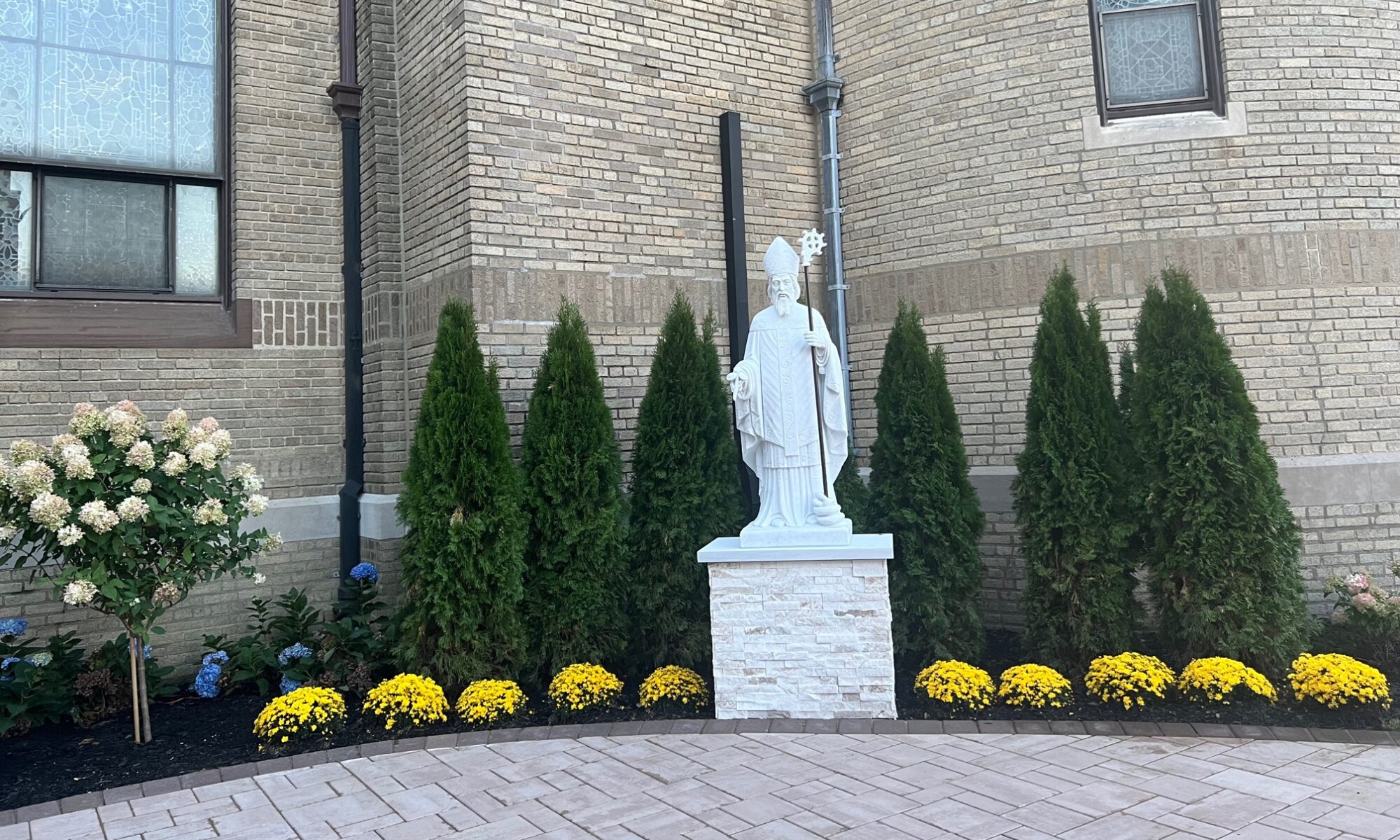
What is the importance of Saint Joseph in the Church?

Saint Joseph is known as the Patron of the Universal Church, but how is he so, if he only appears at the beginning of the gospels and no more is known about him? Saint Matthew tells us how God chose Saint Joseph to be the custodian and loving father of the child Jesus, and support of the Virgin Mother as a caring husband, it is through Saint Joseph, from the lineage of the house of King David (Matthew 1:6-16), that the promise God made to David is fulfilled (2 Samuel 7:12-13). It is Saint Joseph who cares for and protects the Virgin Mary and the infant Jesus Christ from the injustices of the world.

The figure of Saint Joseph is prefigured in the old testament in the person of Joseph son of Jacob, who after being sold as a slave (Genesis 37:26-28), ends up being viceroy of Egypt thanks to the interpretations of dreams; The designs of God are also revealed to Saint Joseph through dreams, it is through a dream where the angel of the Lord tells him that not to be afraid to marry Mary since the child she was carrying in her womb was of the Holy Spirit (Matthew 1:20-21).

It is also through a dream that he receives the angel’s warning to flee to Egypt to protect the safety of his family (Matthew 2:13-14). It is like this also, through Joseph, that his brothers and his father and his entire family went to live in Egypt so that they could survive the famine (Genesis 45:17-20).

Just like the Israelite people left Egypt after the first Passover, where they were saved from death by the mark of the blood of the spotless lamb (Exodus 12:13), eating its meat and sharing the unleavened bread (Exodus 12:8), it is also through revelations given in a dream by the angel of the Lord that Saint Joseph returns from Egypt with Jesus (Matthew 2:19-20), the Lamb of God who will shed His blood on the Cross, which is until now the mark that frees us from the death of sin, and whose flesh we consume in the consecrated host for our salvation.

Let us go to Saint Joseph in those moments when we need protection, since Saint Joseph continues to see in us “the Child and the Mother” (Patris Corde § 5). His example prompts us to recognize the  presence of Jesus in every afflicted face, in every helpless person who comes to Church, who by telling us “everything they did with one of my littlest brothers, they did with me” (Matthew 25:40), lovingly identifies with our poorest brothers and those who suffer.

How should I practice almsgiving?

During the Lenten season, the Church asks us to lean on three spiritual pillars: prayer, fasting and almsgiving, for our preparation for Easter. What is it and how can I give alms? Alms consists of goods given to the poor, or other charitable acts performed for them.

Our Lord Jesus Christ gave us an example of charity and almsgiving in the parable of the good Samaritan, when he healed the wounds of the one who had been beaten by thieves, and left money for his care before going on his way (Luke 10:29-37) and He also gave us a guide on how to perform acts of charity or mercy for our neighbor (Matthew 25:31-40).

Giving alms to the poor is a witness to fraternal charity: it is also a work of justice pleasing to God (CCC 2462)

The Church from its origins has a preferential love for those oppressed by poverty, thus following the teaching of Jesus Christ (Matthew 25:40), through innumerable charitable works. (CCC 2448)

We often attribute, in our social conscience, a negative meaning to the word “alms”. Various circumstances have contributed to this and continue to contribute to it today. We may not agree with the person who gives alms, because of the way in which he does it. We may also not be in agreement with the person who stretches out his hand asking for alms, in that he does not try to earn his own living. We may disapprove of the society, the social system, in which alms deeds are necessary. However, the fact itself of giving help to those who need it, must inspire respect (John Paul II General Audience 3/28/79 § 2)

Let us practice the three spiritual pillars that the Church asks of us in the Lenten season: prayer, as an opening to God; fasting, as an expression of self-mastery also in depriving oneself of something, in saying “no” to oneself; and finally alms, as opening “towards others”. The Gospel draws this picture clearly when it speaks to us of repentance, of “metanoia”. Only with a total attitude —in his relationship with God, with himself and with his neighbor— does man reach conversion and remain in the state of conversion. (John Paul II General Audience 3/28/79 § 3)

How should I practice fasting?

During Lent, the Church asks us to lean on three spiritual pillars: prayer, fasting and almsgiving, for our preparation for Easter. How am I to fast? The Code of Canon Law of the Catholic Church tells us that fasting and abstinence is mandatory on Ash Wednesday and Good Friday, and we must keep abstinence all Fridays of Lent (Canon § 1251).

Fasting consists of limiting yourself to only one main meal, which can be accompanied by two smaller meals during the day, avoiding eating any other food between these meals; abstinence consists of not eating meat of mammals and poultry, this also includes soups and creams since the flavor of meat also persists these meals as well.

It is important to understand that these acts are performed as penance, as our spiritual preparation for the most important feast of the Catholic Church: the Passion and Resurrection of Jesus Christ.

Let us remember the words with which Jesus responded to the disciples of John the Baptist when they asked him: “How is it that your disciples do not fast?” Jesus answered them, “How can the guests of the bridegroom mourn while he is with them? The time will come when the bridegroom will be taken from them; then they will fast ” (Matthew 9:14-15).

Let us practice fasting and abstinence, not only on the days and with the food that have been required of us, but let us try to extend this penance for our spiritual purification, since the time of Lent reminds us that the bridegroom has been taken from us, and fasting during Lent is the expression of our solidarity with Jesus Christ.

How should I pray?

During the Lenten season, the Church asks us to rely on three spiritual pillars: prayer, fasting and almsgiving, for our preparation for Easter, how should I present my prayer? The catechism teaches us the various forms of prayer, these forms include the prayer of blessing or adoration, the prayer of petition, the prayer of intercession, the prayer of thanksgiving, and the prayer of praise.

In the prayer of adoration we recognize ourselves as creatures before our Creator. We exalt the greatness of the Lord who has made us (Psalms 95:1-6) and the omnipotence of the Savior who frees us from evil. It is the action of humbling our spirit before the “King of Glory” (Psalms 24:9-10) and respectful silence in the presence of God (CCC 2628).

The prayer of petition has as its object forgiveness, the search for the Kingdom and any true need (CCC 2646). The request for forgiveness is the first movement of the petition prayer. It is the beginning of a just and pure prayer. Trusting humility brings us back to the light of communion with the Father and His Son Jesus Christ, and with one another (CCC 2631).

The prayer on intercession consists of a petition on behalf of another. It knows no borders and extends to enemies. (CCC 2647)

Every joy and every sorrow, every event and every need can be a reason for a prayer of thanks, which, participating in that of Christ, should fill the entire life (CCC 2648).

The totally disinterested prayer of praise is addressed to God; sing for Him and give Him glory not only for what he has done but because HE IS (CCC 2649)

Let us always dedicate time to prayer, which is a living relationship that we have with the Holy Trinity (CCC 2565), let us choose the form of prayer that our heart tells us, be it adoration, petition, intercession, thanksgiving or praise, let us remember that our Lord Jesus Christ told us that we should always pray since our Father will always listen to us (Luke 18:1-8).

Why do we celebrate Lent?

Prior to Holy Week and Easter Sunday, we celebrate what is known as Lent, but what is Lent and why do we celebrate it? Lent is a liturgical time of preparation and conversion, just as an athlete prepares himself in time for a competition, we during the time of Lent, through three spiritual pillars, prayer, fasting and almsgiving (CCC 1434, 1438), we prepare spiritually for the central celebration of the Church, Easter Sunday.

Lent lasts forty days, beginning on Ash Wednesday and extending until Holy Week. Lent is followed by the “Pascual Triduum”; Holy Thursday, Good Friday and Holy Saturday, time in which we commemorate the passion, death and resurrection of our Lord Jesus Christ until Easter Sunday.

During these forty days the Church asks us to focus on three spiritual actions; prayer, which will give us time to be alone with God, since this is the living relationship of the children of God with their Father who is good beyond measure, with his Son Jesus Christ and with the Holy Spirit.  (CCC 2565); fasting, through which we renounce bodily passions, and together with prayer, open up our hunger for God; and almsgiving, which is a testimony of fraternal charity (CCC 2462), through which we practice the works of mercy entrusted to us by Jesus Christ (Matthew 24:31-46).

Let us practice these spiritual pillars during the Lenten season, so that we can draw closer to God, hunger for Him, and be able to serve Him here on Earth, in preparation for our main celebration, the commemoration of the resurrection of our Lord Jesus Christ, who, by His death and resurrection make us, together with Him, children of God and heirs of the Kingdom of Heaven.

Why do I have to get married by the Church?

When we start to reflect when Jesus explains the alliance that a marriage means, an alliance for life (Matthew 19:4-9). We may have been tempted to think the same as his disciples the first time they heard His words, “If this is the situation between a husband and wife, it is better not to marry” (Matthew 19:10). So why should we seek the sacrament of marriage?

Although we can establish a union through a legal contract, this does not take us far from the days when marriage was simply a consent between the groom and the father of the one who would be the wife. We as children of God and heirs of the Kingdom of Heaven by the Grace of our Lord Jesus Christ, are called to ask God to bless our union, as Tobias
recognized before consummating his marriage (Tobit 8:4-8).

Once blessed by the sacrament of marriage, consecrated by the grace of our baptism, and following the call to holiness that Jesus Christ gave us (Matthew 5:48), our mutual mission as a married couple is now, through our actions, that a once the time of the final judgment has arrived, our spouse is deserving of the Kingdom of Heaven, work for our mutual sanctification, because now we are no longer two but one. One in our walk of faith, one in the formation of our children, one alone in the example we set for others. Jesus Christ himself has told us that we are to be known by our fruits (Matthew 7:16-20).

Jesus Christ elevated the ceremony of marriage to a sacrament at the wedding at Cana, performing the miracle of turning water into wine; so also Jesus Christ has turned us into new wine through the purifying water of our baptism, let us accept the call of Jesus Christ to live in holiness, and if we ever have problems in our marriage let us turn to Mary, our mother, who with her wise words always is going to advise us: “Do everything He tells you” (John 2:5).

Why do we make the sign of the Cross?

Before each prayer we make the sign of the Cross, but why do we do it? The sign of the cross comes from the first centuries of Christianity, since we find in the writings of Tertullian, who lived between the years 160 and 220 AD, the following: “In all our travels and movements, in all our departures and arrivals, When we put on our shoes, when we take a bath, at the table, when we light our candles, when we go to bed, when we sit down, in any of the tasks in which we occupy ourselves, we mark our foreheads with the sign of the cross.”, the first Christians justified this sign according to the book of Revelation where it is indicated that the servants of God will have a seal on their foreheads (Revelation 7:3, 9:4, 14:1).

This sign on the forehead later evolved into the sign of the cross that we know today, from the forehead to the chest, indicating that Jesus Christ descended from heaven to earth in his Incarnation, and from the left shoulder to the right, indicating that after his death He descended into hell and ascended to Heaven, where he is seated at the right hand of the Father.

It is during the sign of the cross that we say the words: “In the name of the Father, and of the Son, and of the Holy Spirit”, thus certifying that the name of God is one and that God is expressed in the three persons of the Holy Trinity. It is also by pronouncing these words that we express our baptismal legacy, where we die to sin and rise in Christ. By making the sign of the cross we are witnessing with body and soul our faith, we mark the cross in ourselves, thus claiming to ourselves the Cross of Christ and His victory over sin through His sacrifice.

Let’s be aware of everything we express when we make the sign of the cross and say the words that accompany it. Let us always be witnesses and proclaim our faith before the world, that our Lord Jesus Christ died on the cross for the atonement of our sins and by His sacrifice and resurrection we have been saved.

What do we celebrate on Candlemas?

On February 2, the Church traditionally celebrates Candlemas, but how does this celebration come about? According to the law (Leviticus 12:1-4), a woman could not touch anything consecrated to God or enter the temple until 40 days after giving birth, this feast of the purification of Mary and the presentation of Jesus to the temple (Luke 2:22-23) occurs for this reason 40 days after Christmas. Jesus was not only presented to the temple but also consecrated to God, according to the law (Exodus 13:2).

On Candlemas, the Catholic faithful will take home candles that have been blessed, these candles will symbolize Jesus Christ, the wax being a symbol of his pure body, the wick the symbol of his soul, and the flame symbol of his divinity.

This candle, every time it is lit in your home, will remind us that Jesus Christ is the Light of the world, that all those who follow him will have the light that gives life and will not walk in darkness (John 8:12).

It is following this sacred tradition that we bring our children shortly after they are born to present them to our Lord, and then consecrate them to God through baptism.

Sacred Tradition and Sacred Scripture, are bound closely together, and communicate one with the other. For both of them, flowing out from the same divine well-spring, come together in some fashion to form one thing, and move towards the same goal.” Each of them makes present and fruitful in the Church the mystery of Christ, who promised to remain with his own “always, to the close of the age” (CCC 80)

Let us be part of the Church’s tradition, which is a living transmission, carried out by the Holy Spirit, which, although it is different from Holy Scripture, is closely connected to it. Through it, the Church in her doctrine, life and worship, perpetuates and transmits to every generation all that she herself is, all that she believes (CCC 78).

What is catechism?

Many times we have heard about catechism, we are even aware that we must take our children to catechism so that they know their faith. But, what is catechesis and how was it born? Catechesis is a mandate from Jesus Christ to his Apostles (Matthew 28:19-20). This treasure, received from the Apostles, has been faithfully guarded by their successors. All Christ’s faithful are called to hand it on from generation to generation, by professing the faith, by living it in fraternal sharing, and by celebrating it in liturgy and prayer (CCC 3).

The Church has always considered catechesis one of her primary tasks. Jesus Christ entrusted his apostles with the mission and power to proclaim to humanity what they had heard, what they had seen with their eyes, what they had looked upon and touched with their hands, concerning the Word of Life. He also entrusted them with the mission and power to explain with authority what He had taught them, His words and actions, His signs and commandments. And He gave them the Holy Spirit to fulfill this mission.

Very soon the name of catechesis was given to the whole of the efforts within the Church to make disciples, to help people to believe that Jesus is the Son of God, so that believing they might have life in His name, and to educate and instruct them in this life and thus build up the Body of Christ. The Church has not ceased to devote her energy to this task (Catechesi Tradedae 1).

Catechesis is an education in the faith of children, young people and adults which includes especially the teaching of Christian doctrine imparted, generally speaking, in an organic and systematic way, with a view to initiating the hearers into the fullness of Christian life (CCC 5).

Catechesis also means the intention to transmit not one’s own teaching or that of some other master, but the teaching of Jesus Christ, the Truth that He communicates or, to put it more precisely, the Truth that He is. We must therefore say that in catechesis it is Christ, the Incarnate Word and Son of God, who is taught – everything else is taught with reference to Him – and it is Christ alone who teaches – anyone else teaches to the extent that he is Christ’s spokesman, enabling Christ to teach with his lips. Whatever be the level of his responsibility in the Church, every catechist must constantly endeavor to transmit by his teaching and behavior the teaching and life of Jesus (CT 6).

Let us also follow the mandate of Jesus Christ, let us be the first catechists for our children, let us catechize our friends and family with our example of life following the teachings of our Lord Jesus Christ and let us be receptive to continue being catechized always.

When should I receive the anointing of the sick?

The Sacrament of Anointing of the Sick, often referred to as Extreme Unction or Last Rites, is a ritual of healing appropriate not only for those in immediate danger of death but also for those suffering from physical, mental, or spiritual sickness. Jesus Christ establishes this sacrament through his ministry healing the sick, and entrusting His disciples that they also do it (Mark 6:12-13).

This is not a sacrament for those only who are at the point of death. Hence, as soon as anyone of the faithful begins to be in danger of death from sickness or old age, the fitting time for him to receive this sacrament has certainly already arrived (CCC 1514).  If a sick person who received this anointing recovers his health, he can in the case grave illness receive this sacrament again. It is fitting to receive the Anointing of the Sick just prior to a serious operation. The same holds for the elderly whose frailty becomes more pronounced (CCC 1515).

Like all the sacraments the Anointing of the Sick is a liturgical and communal celebration, whether it takes place in the family home, a hospital or church, for a single sick person or a whole group of sick persons. It is very fitting to celebrate it within the Eucharist, the memorial of the Lord’s Passover. If circumstances suggest it, the celebration of the sacrament can be preceded by the sacrament of Penance and followed by the sacrament of the Eucharist. As the sacrament of Christ’s Passover the Eucharist should always be the last sacrament of the earthly journey, the “viaticum” for “passing over” to eternal life (CCC 1517).

The celebration of the sacrament includes the following principal elements: the “priests of the Church” —in silence— lay hands on the sick; they pray over them in the faith of the Church (James 5:14-15), this is the epiclesis proper to this sacrament; they then anoint them with oil blessed, if possible, by the bishop. These liturgical actions indicate what grace this sacrament confers upon the sick (CCC 1519).

The first grace of this sacrament is one of strengthening, peace and courage to overcome the difficulties that go with the condition of serious illness or the frailty of old age. This grace is a gift of the Holy Spirit, who renews trust and faith in God and strengthens against the temptations of the evil one, the temptation to discouragement and anguish in the face of death (Hebrews 2:15). This assistance from the Lord by the power of his Spirit is meant to lead the sick person to healing of the soul, but also of the body if such is God’s will. Furthermore, “if he has committed sins, he will be forgiven.” (CCC 1520).

Let us go without fear to receive this sacrament when we are sick, or already advanced in age, let us entrust ourselves to our Lord Jesus Christ before any major surgery and let us unite ourselves with the suffering and glorified Lord to relieve us and save us, let us surrender our suffering to join the Passion and Death of Christ; and thus contribute to the good of the People of God (CCC 1499)