Why do the readings change during some Sundays of Lent?

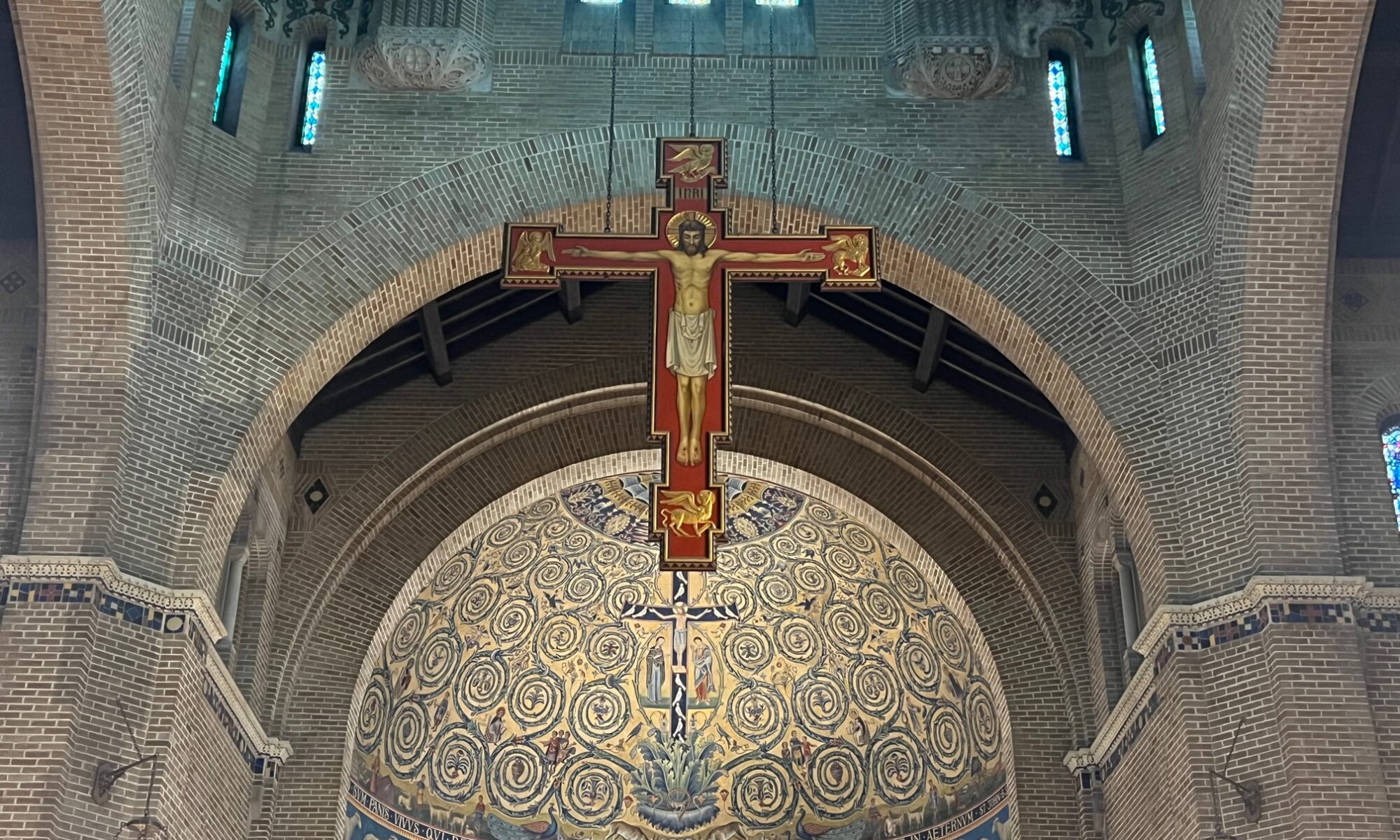
During the third, fourth and fifth Sundays of Lent, some years the readings change from its corresponding liturgical cycle to readings from cycle A, why is this change? In order to answer this question, we must go back to two moments in the life of our Lord Jesus Christ where He leaves us a responsibility, one of them is on Thursday when he celebrated the Passover meal with his disciples, Jesus, took bread, blessed it, broke it and distributed it to his disciples, saying to them “This is my body, which will be given for you; do this in memory of me.” (Luke 22:18-20), and it is because of these words that we celebrate the Mass, the readings of which our Holy Mother Church has established in three annual cycles.

Between these words and the following ones that we must evaluate, the passion, death, and resurrection of our Lord Jesus Christ occurs. His death and resurrection are the most important events in Christian theology. They form the point in Scripture where Jesus gives His ultimate demonstration that He has power over life and death, so He has the ability to give people eternal life.

The second moment comes from the words that our Lord pronounces after his resurrection: “Go, therefore, and make disciples of all nations, baptizing them in the name of the Father, and of the Son, and of the holy Spirit” (Matthew 28:19), this is the call to our mission of evangelization.

When there are people who wish to enter the Catholic Church and receive these three sacraments, the church brings us readings from the Gospel of St. John during these Sundays, to focus on the spiritual journey of those who are preparing to be received into the Catholic faith, emphasizing themes of healing, conversion, and the promise of eternal life.

These readings are part of one of the rites of Christian initiation known as scrutinies. The first scrutiny focuses on Jesus’ encounter with the Samaritan woman at the well, which symbolizes the thirst for spiritual truth and the offering of Christ as living water.

The second scrutiny focuses on Jesus’ healing of the man born blind, emphasizing the gift of sight and overcoming spiritual darkness, since Christ is the light of the world.

The third scrutiny presents Jesus raising Lazarus from the dead, representing Christ’s power over death and the promise of eternal life through Jesus Christ who is the way, the truth, and the life.

Let us rejoice when we hear these readings outside of their liturgical cycle, for this means that we are fulfilling the mission that our Lord Jesus Christ entrusted to us before His ascension into heaven: to evangelize people of all nations and to make them disciples of our Lord.

What are the corporal postures I should do during Mass?

In the celebration of Mass, we lift up our hearts, our minds and our voices to God, because we are creatures composed of body and soul and that is why our prayer is not confined to our minds, our hearts and our voices, but is also expressed in our body. When our bodies participate in our prayer, we pray with our whole person, as incarnate spirits just as God created us.

Every bodily posture we assume at Mass emphasizes and reinforces the meaning of the action in which we are engaged. Standing is a sign of respect and honor and so we stand when the celebrant, who represents Christ, enters and leaves the assembly. When we stand for prayer, we assume the fullness of our stature before God, not with pride, but with humble gratitude for the wonderful things God has done in creating and redeeming us. We stand to listen to the gospel, the summit of revelation, the words and deeds of the Lord.

The kneeling posture has come to mean worship. It is for this reason that we kneel throughout the Eucharistic Prayer after the singing or praying of the Saint.

Sitting is the body posture for listening and meditation; therefore, the assembly sits during the pre-Gospel readings.

However, there are other bodily gestures that intensify our prayer at Mass. During the penitential act, the action of beating our chest at the moment of formulating the words “through my fault” can strengthen our awareness that our sin is our fault. In the Creed, we are invited to bow to the words that commemorate the Incarnation: “He was conceived by the Holy Spirit, born of the Virgin Mary, and became man.” This gesture signifies our deep respect and gratitude to Christ who, through God, did not hesitate to come among us as a human being and share our human condition to save us from sin and reestablish our friendship with God.

After the Lord’s Prayer comes the Greeting of Peace, a gesture through which we express through a handshake and the devout greeting of peace that accompanies it. This exchange is symbolic. Sharing peace with the people around us represents, for us as well as for them, the totality of the Church’s community and of all humanity.

We make a sign of reverence, before receiving Communion, a bow, a gesture by which we express our reverence and honor Christ, who comes to us as spiritual food. The postures and bodily gestures that we make at Mass fulfill a very important function. The Church sees in these common postures and bodily gestures both a symbol of the unity of those who have come to worship and a means of protecting that unity. We are not free to change these postures to suit our own piety, for the Church makes it very clear that our unity in bodily postures and gestures are an expression of our participation in the one Body formed by those baptized with Christ, our head. When we stand, when we kneel, when we sit, when we bow, as well as when we make a sign as a common action, we unambiguously testify that we are indeed the Body of Christ, united in heart, mind, and spirit.


USCCB, “Posturas y gestos corporales en la Misa”, United States Conference of Catholic Bishops, accessed 17 November 2024, https://www.usccb.org/es/prayer-and-worship/the-mass/posturas-y-gestos-corporales-en-la-misa

Is Halloween a Catholic Holiday?

In our society there are some very mixed feelings about Halloween. Some, self-claimed “Christian” denominations, hold that Halloween is evil and should absolutely not be celebrated. Others take it too far, as expected with almost every Catholic holiday that has been secularized, and have brought evil and occult practices into it, staining the holiday’s reputation.

Contrary to the way it is celebrated in the secular world, Halloween has extremely Catholic origins that should absolutely be noted.

All Saint’s Day is a major solemnity in the Catholic Church, an old one at that. Originally, the feast was set as the first Sunday after Pentecost in the fourth century, which meant the feast would have originally been in the month of May. However, the feast was not an authorized solemnity until 835 under Pope Gregory IV.

A common practice in olden times was to have a large celebration the night before a major solemnity. Take Ash Wednesday, for example; Catholics often throw parties and host gatherings the night before and have food, drink, dancing, and even sometimes costumes. Another occasion where celebrations before a major feast is Christmas; we have Christmas Eve. Families get together and have food and enjoy themselves the night before the feast.

All Saint’s Day, being a major feast in the Catholic Church, held the same tradition of having large celebrations and even processions the night before. Considering the feast was known as “All Hallows’ Day,” the night before became known as “All Hallows’ Eve,” later on being shortened to just “Halloween.”

Costumes actually stem from the same general idea. Given that the feast was about the Saints and martyrs, it was customary to have statues a part of processions the night before. However, not everyone owned a statue of a Saint. And so people would dress up as Saints in these processions, remembering their examples and asking for their intercession.

As time goes on, the secular world has done its work and now we have Rapunzel and Batman taking evening strolls every Halloween.

It is interesting how Catholic these customs used to be, and now they are so ingrained in Western world culture that their value is forgotten and often perverted to mean something worldly and pagan. The concepts of death and purgatory are bone-chilling, to say the least; the afterlife is so unknown to us.

However, there is truly nothing evil about the origins or traditions of Halloween. The world may try to pervert it all they want; they do it with Christmas, St. Valentine’s Day, St. Patrick’s Day, and many more. Brothers and sisters in Christ, let’s take our holidays back and stop letting society taint them!


Dunleavy, Korynne “Is Halloween a Catholic Holiday?” Catholicism Coffee, 31 October 2021, accessed 18 October 2024, https://catholicismcoffee.org/is-halloween-a-catholic-holiday-catholicism-coffee-3695097a0617

What is the danger of New Age ideologies for Catholics?

During the last decades, many currents of thought have emerged that promote the elevation of the human being through different disciplines whose intention is to generate spiritual self-sufficiency, taking advantage of the legitimate human nature of spiritual longing. This group of various disciplines is commonly referred to as “New Age” ideologies.

An adequate Christian discernment of New Age thought and practice cannot fail to recognize that, it represents something of a compendium of positions that the Church has identified as heterodox.  Saint John Paul II warned us with regard to the “return of ancient gnostic1 ideas under the guise of the so-called New Age: We cannot delude ourselves that this will lead toward a renewal of religion. It is only a new way of practicing gnosticism – that attitude of the spirit that, in the name of a profound knowledge of God, results in distorting His Word and replacing it with purely human words…”2 (Jesus Christ the Bearer of the Water of Life, §1.4)

People feel the Christian religion no longer offers them something they really need. The search which often leads people to the New Age is a genuine yearning: for a deeper spirituality, for something which will touch their hearts, and for a way of making sense of a confusing and often alienating world.

Any problems there are with New Age are to be found in what it proposes as alternative answers to life’s questions. If the Church is not to be accused of being deaf to people’s longings, her members need to do two things: to root themselves ever more firmly in the fundamentals of their faith, and to understand the often-silent cry in people’s hearts, which leads them elsewhere if they are not satisfied by the Church. There is also a call in all of this to come closer to Jesus Christ and to be ready to follow Him, since He is the real way to happiness, the truth about God and the fulness of life for every man and woman who is prepared to respond to his love. (Jesus Christ the Bearer of the Water of Life, §1.5)

We can clearly identify these ideologies by their way of promoting a higher state of consciousness or trying to improve our health through their methods, whether through “energy therapies”, “energy balancing”, “bioenergetics” or “awakening the intelligence of our organs” among others.

Let us remember that our Lord Jesus Christ is the way, and the truth and the life, no one can enter the Kingdom of Heaven except through Him (John 14:6). Let us lift our spirits through fervent prayer and be one with our Lord through communion every time we come to Mass.


1 Gnosis: in a generic sense, it is a form of knowledge that is not intellectual, but visionary or mystical, thought to be revealed and capable of joining the human being to the divine mystery.

2 John Paul II, Crossing the Threshold of Hope, (Knopf) 1994, 90

What are the lay ministries?

“There are various ministries, but the Lord is the same. There are various functions, but it is the same God who works everything in everyone … This is done by the same and only Spirit, who distributes to each one his gifts as he wishes”, as Saint Paul explains to us (1 Corinthians 12: 5-6,11).

Therefore, in the People of God there are various services, various ministries. Some are the ministries that are conferred through the sacrament of Orders, such as the diaconate, the priesthood, and the episcopacy. Others, however, are not conferred through the sacrament and, therefore, the faithful who receives them do not leave their lay status.

The ministries destined to the liturgical service were considered as institutions prior to the reception of sacred orders, and were called “minor orders.” Among these were the ostiary, the lector, the exorcist and the acolyte.

After the Second Vatican Council, a revision of these functions was made, and they ceased to be called “minor orders”, and the “ministries” were transformed, preserving only the acolyte and the lector, although leaving to the episcopal conferences the possibility of creating others that were necessary for the region (Ministeria Quaedam).

On 2021, third lay ministry was added: that of the catechist (Antiquum ministerium).

Thus, there are three lay ministries: acolyte, lector and catechist, which can be entrusted to any member of the faithful, who meets the age and conditions established by the episcopal conference. To this end, they must be instituted through a liturgical rite.

This, however, does not mean that only instituted catechists can be the communicators of the truth of the faith, or that only instituted lectors can read the word of God in the liturgical assembly, or that only instituted acolytes can take charge of the altar service. These functions may also be performed by any other lay person, either de facto or through the temporary assignment of the parish priest. The existence of lay ministries only indicates that those who are instituted through the liturgical rite will do so in a stable way.

Let us consider whether in our condition as lay people we feel called to any of these ministries, to contribute with the gifts and charisms that the Holy Spirit has blessed us and to collaborate with our parish in the Holy Eucharist or sharing the faith as catechists.


Liturgia Papal, “Los ministerios laicales”, LiturgiaPapal.org, 12 February 2022, translated from https://liturgiapapal.org/index.php/manual-de-liturgia/ministerios/1155-los-ministerios-laicales.html

What does Epiphany mean for us Catholics?

The word Epiphany comes from Greek, whose meaning is ‘revelation’, which in these Christmas times alludes to the revelation that the wise men of the East received about the birth of the King among the Jews. We must emphasize that the wise men of the East not only recognize Jesus Christ as King but as prophet and high priest, due to the nature of the offerings presented when they arrived at the place where the baby Jesus was (Matthew 2:11).

The wise men from the east made the pilgrimage to Judea to worship the King following the light of the star that appeared in the sky (Matthew 2:1-2). Likewise, we make the pilgrimage from our homes to the new Jerusalem, the temple of God, following the light of Jesus Christ; to worship Him, recognize Him as King, Priest and Prophet, and enter in communion with Him.

But we must ask ourselves, why do we do it? Have we really had the revelation that Jesus Christ is the Son of God, the one who takes away the sin of the world? Do we truly believe that the consecrated bread and wine are now His Body and Blood?

Let us take advantage of this time to meditate on these questions, and ask the Holy Spirit for the gift of understanding and just as the light of a star revealed the birth and royal lineage of our Lord, so also, may the light of the Gospel reveal in us the divine nature of our Lord Jesus Christ, to be able to receive Him in body, blood, soul and divinity in Holy Communion.

Just as the wise men of the East recognized in Jesus Christ the promised Messiah, God’s new alliance with the whole world, let us also recognize the body and blood of Jesus in the consecrated bread and wine, source of eternal life, which was offered as a sacrifice for the forgiveness of our sins so we can achieve eternal life.

Why do we celebrate the Solemnity of the Holy Family?

The Son of God has come into the world from the Virgin whose name was Mary; He was born in Bethlehem and grew up in Nazareth under the protection of a righteous man named Joseph.

Jesus was from the beginning the center of his great love, full of concern and affection; It was his great vocation; was his inspiration; It was the great mystery of his life. In the house of Nazareth: He “grew in wisdom and stature and favor with God and men” (Luke 2:52). He was obedient and submissive, as a son should be with his parents. This Nazarene obedience of Jesus to Mary and Joseph occupies almost all the years that He lived on earth, and constitutes, therefore, the longest period of that total and uninterrupted obedience that He has paid to the heavenly Father. There are not many years that Jesus dedicated to the service of the Good News and finally to the Sacrifice of the Cross.

Thus, an important part of that divine mystery belongs to the Holy Family, the fruit of which is the redemption of the world.

On the solemnity of the Holy Family of Nazareth, the Church, through the liturgy of the day, expresses the best and most fervent wishes to all the families of the world. Let us remember from Saint Paul’s Epistle to the Colossians only these two phrases so rich in meaning: “the peace of Christ reign in your hearts” (Colossians 3:15).

Indeed, peace is a sign of love, it is its confirmation in the life of the family. Peace is the joy of hearts; It is consolation in daily fatigue. Peace is the support you offer. wife and husband reciprocally, and that children find in their parents and parents in their children.

All families in the world welcome the wish for this peace.

Also accept another desire, which is spoken of below in the same Letter of Saint Paul to the Colossians: “the word of Christ may dwell in you richly” (Colossians 3:16).

The Word is a manifestation of thought and a means of reciprocal understanding. Parents begin their educational work by teaching their child the words. They reveal understanding and soul, and open before the new man the paths of knowledge of the world, of men and of God.

The Word is a fundamental means of education and development for every man.

Today, let all the families of the world welcome the desires for good and peace that spring from the richness of the Word of Christ, so that, through faith in it, the children of men may find that force of life that He has transmitted to them with His birth. 


John Paul II, “Angelus”, Castelgandolfo, Vatican City, 30 December 1979, translated from https://www.vatican.va/content/john-paul-ii/es/angelus/1979/documents/hf_jp-ii_ang_19791230.html

How should we receive Christmas?

The first coming of Jesus Christ into the world is that one prophesied from the beginning of time (Genesis 3:15) to save mankind from death from sin, because God so loved the world that he gave his only Son, that whoever believes in him shall not perish but have eternal life (John 3:16). Our Lord Jesus Christ was to come into this world as a man, because, just as Adam’s trespass brought condemnation for people, so also through the obedience of Jesus Christ makes all men righteous that they may have life (Romans 5:18-19).

The evangelist tells us that Mary “gave birth to her firstborn, wrapped him in swaddling clothes and laid him in a manger, because there was no room for them in the inn” (Luke 2:7). The Son of God, coming into this world, finds a place where the animals feed. Hay became the first bed for the One who will reveal Himself as “the bread that came down from heaven” (John 6:41). Saint Augustine, with other Church Fathers, was impressed by this symbolism: “Laid in a manger, he became our food” (Sermon 189:4). 1

Jesus through his ministry tells us that we are to be prepared for his second coming. The season of Advent gives us an example of how we can prepare.

During Advent we prepare the nativity scene, cleaning the dust accumulated in each figurine because it has been stored for almost a year, we make a space in our home to assemble it so that it looks beautiful, and then we keep the manger empty to place baby Jesus in it on the last hours of Christmas Eve. Thus we must also prepare ourselves to receive Jesus,  cleansing our souls of those sins we have committed, making room for mercy in our hearts, and just as the manger receives Jesus, let us also receive his body which is the bread of eternal life (John 6:35) every time we partake of the Holy Eucharist.

Let us always celebrate Christmas with the perfect banquet, that banquet that Jesus Christ himself has prepared for us, that banquet that gives us eternal life consecrated on the altar, so that the grace, love and peace of our Lord Jesus Christ may always be with us.


1 Francis, “Admirabile signum” Apostolic Letter § 2, Greccio, 1 December 2019, https://press.vatican.va/content/salastampa/en/bollettino/pubblico/2019/12/01/191201b.html

What are relics and what meaning do they have for Catholics?

The word relic comes from the Latin relinquo, literally meaning “I leave”, or “I abandon”. A relic is a piece of the body of a saint, an item owned or used by the saint, or an object which has been touched to the tomb of a saint. Traditionally, a piece of the body of a saint, especially that of a martyr, may be with the permission of the local ecclesiastical authority used in solemn processions recalling the specific holy person.

There are three classes of sacred relics. The first-class is a part of the saint’s body. The second-class is a piece of the saints clothing or something used by the saint, while the third-class is an object which has been touched to a first-class relic.

There are several scriptural passages that support the veneration of relics. For example, the Israelites took Josephs bones when they departed Egypt (Exodus 13:19). The bones of Elisha came in contact with a dead person who then was raised to life (2 Kings 13:21). The same Elisha took the mantle of Elijah and fashioned a miracle with it (2 Kings 2:13). The Christians of Ephesus, by using handkerchiefs and cloths touched to Saint Paul’s skin, effected the healing of the sick (Acts 19:11-12).

To venerate the relics of the saints is a profession of belief in several doctrines of the Catholic faith:

  1. The belief in everlasting life for those who have obediently witnessed to Christ and His Holy Gospel here on earth;
  2. The truth of the resurrection of the body for all persons on the last day;
  3. The doctrine of the splendor of the human body and the respect which all should show toward the bodies of both the living and the deceased;
  4. The belief in the special intercessory power which the saints enjoy in heaven because of their intimate relationship with Christ the King; and
  5. The truth of our closeness to the saints because of our connection in the communion of saints we as members of the Church militant or pilgrim Church, they as members of the Church triumphant.

These relics summon us to appreciate more profoundly not only the heroic men and women, who have served the Master so selflessly and generously, but especially the love and mercy of the Almighty who called these His followers to the bliss of unending life in His eternal kingdom.


Saunders, William. “Church Teaching on Relics” Arlington Catholic Herald. accessed 14 October 2023, https://www.catholiceducation.org/en/culture/catholic-contributions/church-teaching-on-relics.html

In these troubled times, how can we have access to God?

As He said farewell to His disciples, Jesus gave them tranquility, He gave peace, with a promise: “I will not leave you orphans” (John 14:15-21). He defends them from that painful feeling of being orphans. In today’s world, there is a great sense of being orphaned: many people have many things, but they lack the Father. And in the history of humanity, this has repeated itself: when the Father is missing, something is lacking and there is always the desire to meet, to rediscover the Father. Today we can say that we live in a society where the Father is missing, a sense of being orphaned that specifically affects belonging and fraternity.

And so Jesus promises: “I am going away, but someone else will come who will teach you how to access the Father. He will remind you how to access the Father”. The Holy Spirit does not come to “make us His clients”; He comes to point out how to access the Father. That is what Jesus opened, what Jesus showed us. A spirituality of the Son alone or the Holy Spirit alone does not exist: the center is the Father. The Son is sent by the Father and returns to the Father. The Holy Spirit is sent by the Father to remind us and to teach us how to access the Father.

Only with this awareness of being children, that we are not orphans, can we live in peace among ourselves. Wars, either small ones or large ones, always have a dimension of being orphans: the Father who makes peace is missing. And so when Peter and the first community respond to the people regarding why they are Christians (1 Peter 3:15-18), says: “do it with gentleness and reverence, keeping your conscience clear”, that is, the gentleness that the Holy Spirit gives. The Holy Spirit teaches us this gentleness, this tenderness of the Father’s children. The Holy Spirit does not teach us to insult. And one of the consequences of this feeling like orphans is insulting, wars, because if there is no Father, there are no brothers, fraternity is lost. This tenderness, reverence, gentleness are attitudes of belonging, of belonging to a family that is certain of having a Father.

Let us ask the Holy Spirit to remind us always, always about this access to the Father, that He might remind us that we have a Father. And to this civilization, with this great feeling of being orphaned, may He grant the grace of rediscovering the Father, the Father who gives meaning to all of life, and that He might unite humanity into one family.


Francis, “The Holy Spirit reminds us how to access the Father” homily, Chapel of the Domus Sanctae Marthae, Vatican City, 17 May 2020, https://www.vatican.va/content/francesco/en/cotidie/2020/documents/papa-francesco-cotidie_20200517_spiritosanto-accesso-al-padre.html